
Near-pure gold, usually seen in bars and coins rather than everyday jewellery.
Explore 24K goldGold education
Gold Purity Guide
Understand 14K, 16K, 18K, 20K, 22K and 24K gold—and why professional testing matters.
A traditional choice for gold jewellery, balancing gold content and durability.
Explore 22K goldA less common jewellery purity that sits between 18K and 22K.
Explore 20K goldContains more alloy for strength and is commonly used in modern fine jewellery.
Explore 18K goldA durable alloy containing about two-thirds gold, used in selected jewellery styles.
Explore 16K goldA durable gold alloy with a lower gold content than 18K or 22K.
Explore 14K goldWhat does karat mean?
Karat describes the proportion of gold in an alloy. Higher karat gold contains more gold, while lower karat jewellery includes more alloy metals for strength, colour or durability.
916 and 999 gold
A 916 mark generally refers to 22K gold at approximately 91.6% purity. A 999 mark generally refers to near-pure 24K gold at approximately 99.9% purity. Actual jewellery purity should still be verified before final valuation.
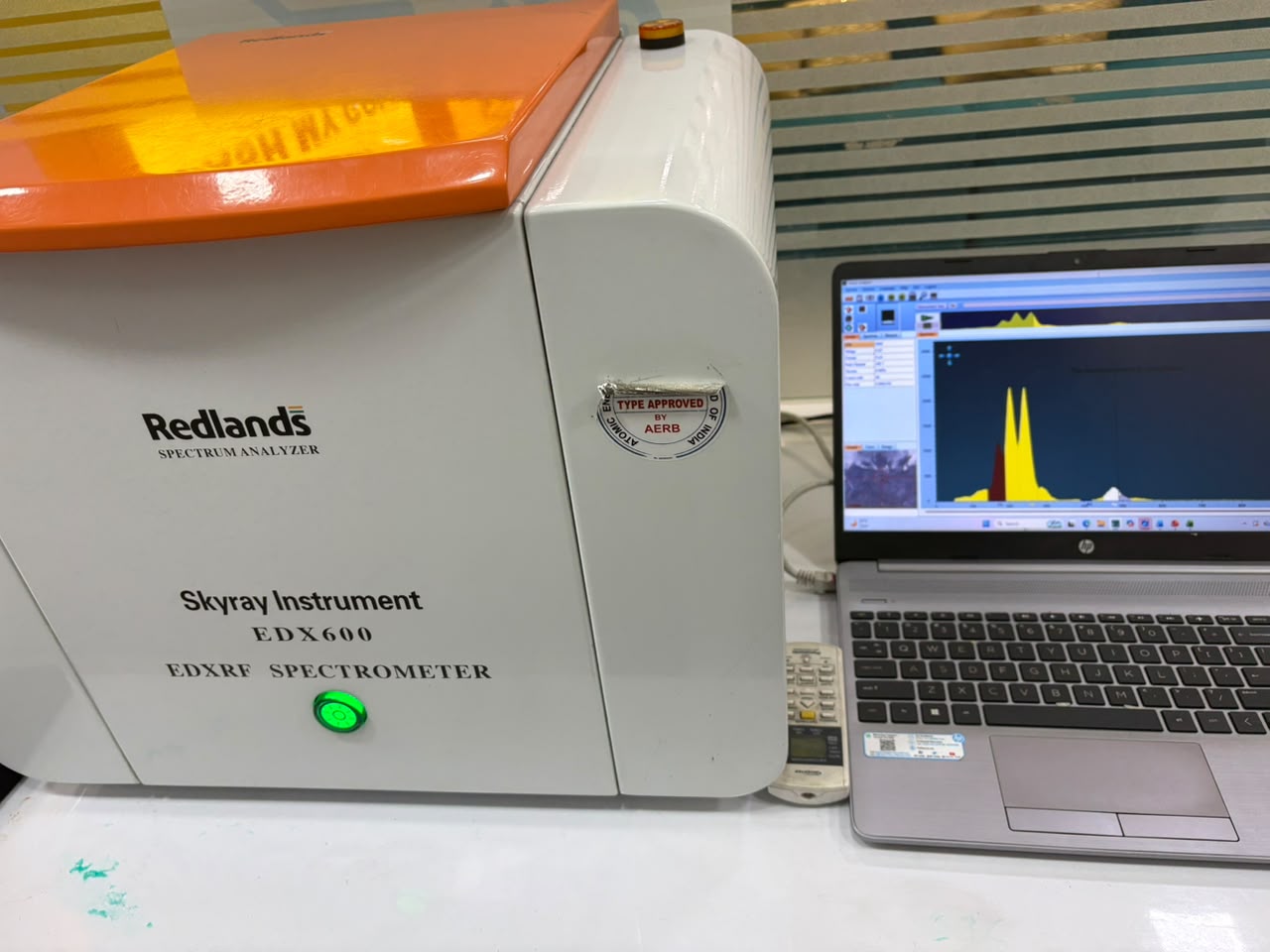
Hallmark and XRF testing
A hallmark is useful identification, but professional inspection and testing confirm the purity used for a final valuation. XRF testing can assess metal composition, while precision weighing helps confirm net gold weight.
22K vs 24K gold
24K contains more gold and is commonly associated with coins and bars. 22K combines high gold content with alloy metals and is widely used for traditional jewellery.
Common fineness marks
| Description | Gold content |
|---|---|
| 24K / 999 | 99.9% |
| 22K / 916 | 91.6% |
| 20K | About 83.3% |
| 18K / 750 | 75% |
| 16K | About 66.7% |
| 14K / 585 | 58.5% by the 585 mark |
Karat is expressed out of 24; fineness is expressed out of 1,000. The rate table uses 58.3% to calculate its 14K reference, not the 58.5% denoted by a 585 mark. This comparison does not certify every listed karat as an approved hallmarking grade.
Checking a hallmark without guessing
For Indian hallmarked jewellery, inspect the BIS mark, stated purity and the HUID where applicable. You can check a HUID through the official BIS Care service. Older items can carry different markings; absence of a modern identifier does not alone establish that an item is fake. Keep available invoices, but do not treat an invoice or stamp as a substitute for assessment.
Why home tests and XRF have limits
Colour, a magnet or a visual inspection cannot prove gold purity. Home acid or scratch tests can damage jewellery and may not identify plating or mixed construction reliably. XRF assesses composition near the tested surface; coatings, solder and uneven parts can affect readings. A professional may check several areas and use additional methods where needed. Ask what the test establishes and what remains uncertain.